So, why should you consider choosing a reputable mirror glass manufacturer for your project? Well, a mirror isn't just a shiny surface to look into—it's a real architectural element that you can’t just toss together without some care. According to Grand View Research’s 2024 Mirrors Market report, the global market for mirrors is still growing—big time—especially in residential spaces, hotels, retail stores, and commercial buildings. Because of that, there's a real need for consistency in coating quality, precise cutting, and reliable delivery. And don’t forget, the U.S. Department of Energy points out that Windows can make up roughly 25% to 30% of a home's energy bill for heating and cooling. That means choosing the right glass really matters, even if your main goal is just to get a good reflection.
An experienced mirror glass manufacturer can handle the whole process—from verifying the thickness and making sure the silver layer sticks properly to checking the edges, flatness, and even how it’s packaged before it ships out. For bathrooms, seaside hotels, or busy retail spaces, these little details can make or break the project. A trustworthy supplier should be able to give you test records, traceability for batches, and straightforward installation instructions. Standards like EN 1036 and ASTM C1503 are helpful guides, but they can’t replace testing that's specific to your project.
Mark Meshulam, a well-known building-glass expert, once said, “Glass is a system, not merely a product,” and honestly, that really hits the mark. Good manufacturers take into account humidity, wall movements, cleaning routines, and lighting when they make their glass. If you’re shopping for a copper- and lead-free mirror from China, for example, it’s smart to ask for proof of performance and material declarations. Nothing’s perfect, though—I’ve seen some pretty looking samples fail because the edges weren’t protected properly. Ultimately, the safer bet is to work with someone who’s open to inspections, keeps good records, and is willing to improve if things don’t go perfectly the first time.
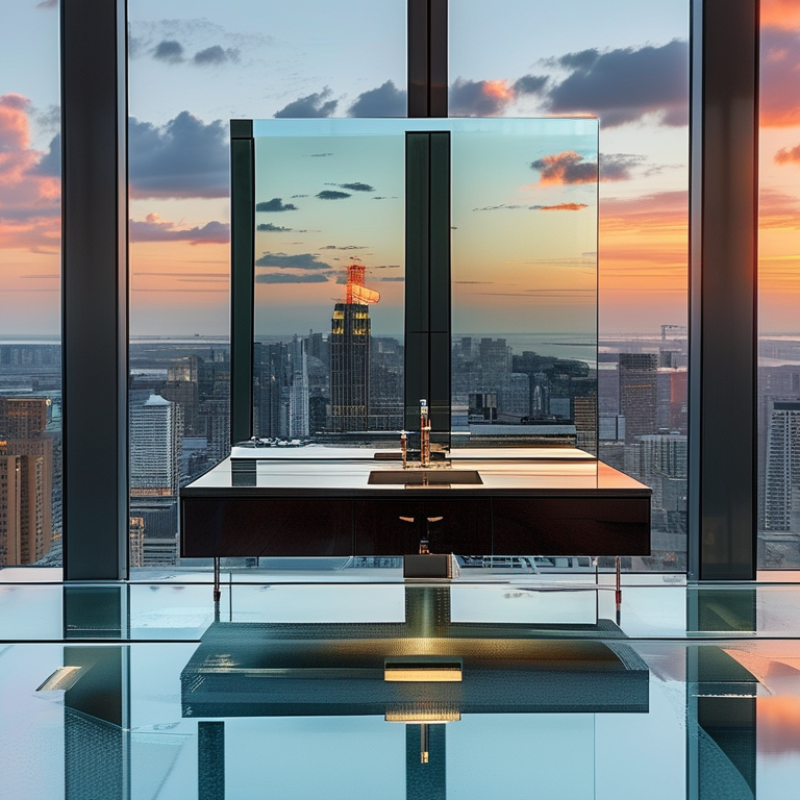
A mirror glass manufacturer provides more than reflective panels. The team helps select glass thickness, mirror type, edge finishing, and suitable dimensions for each project. In a bathroom, this may mean moisture-resistant backing and polished edges. In a retail interior, it may require large panels with consistent reflection across adjacent walls. Small differences become visible under bright lighting.
Experienced manufacturers usually offer drawings, samples, cutting, drilling, tempering, and careful packaging. They can review installation conditions before production begins. This practical check can prevent chipped corners, incorrect hole positions, or difficult site adjustments. Quality control should include surface inspection, coating checks, dimensional measurement, and packing verification. It sounds basic. It is not always done well.
A reliable supplier also explains limitations instead of promising everything. Very large mirrors may need joint planning, stronger support, or safer handling procedures. Color, lighting, and surrounding materials can change the perceived reflection. I have found that sample approval is useful, though one sample cannot represent every production condition. A clear specification sheet reduces confusion between designers, contractors, and fabricators. For buyers researching the LYD glass Silkscreen Printing Glass China Manufacturer category, the same questions still matter: What is tested, how are defects handled, and who supports installation? Clear answers reveal more than polished photographs.
Choosing a mirror glass manufacturer requires more than checking surface shine. Glass quality begins with consistent thickness, clean edges, accurate dimensions, and controlled coating processes. In a workshop, small edge chips may appear harmless, yet they can create stress points during installation. I would inspect corners, drilled holes, and the reflection under angled light.
Safety testing should match the project’s location and use. Tempered glass needs verified heat treatment, suitable fragmentation performance, and clear traceability. Laminated options may be more appropriate where breakage protection matters. Ask for current test reports, production records, and quality procedures, rather than relying on attractive samples alone. A sample can look excellent.
For buyers searching Colored Tinted Tempered Glass from China manufacturer, technical communication is especially important. Confirm the tint formula, visible light transmission, coating durability, and color consistency between batches. Request physical samples from different production runs when possible. Check whether the factory controls glass cutting, tempering, polishing, and inspection internally. Independent testing can expose weaknesses that factory photos will not show.
A reliable manufacturer should explain applicable safety standards without making vague promises. They should also identify limitations, such as distortion near edges or slight color variation after tempering. That honesty matters. No production line is perfectly flawless, and pretending otherwise weakens trust. Site conditions, transport vibration, installation pressure, and cleaning methods can also affect final performance. Experienced suppliers discuss these details before production begins.
Customization should begin with the building’s use, not a catalogue image. From project reviews, I have learned that appearance rarely solves every requirement. A hotel lobby may need large, low-iron mirrors with concealed joints. A fitness studio may need safer, smaller panels with controlled reflection. A retail façade may require ceramic patterns, printed graphics, or selective opacity. Each option changes the glass thickness, processing route, edge finish, and installation method.
The U.S. Department of Energy reports that Windows can cause 25–30% of residential heating and cooling energy use. This makes coating selection more than a visual decision. A manufacturer can compare reflectance, light transmission, thermal performance, and glare before production. Tempering also supports safety in demanding applications, while silk-screen printing can create repeatable privacy bands or decorative borders. ATempered silk screen printing glass manufacturer ... should provide samples, dimensional tolerances, and test documentation. Small details matter.
The International Energy Agency states that buildings account for approximately 30% of global final energy consumption. That figure encourages careful material choices, although mirror glass alone cannot solve a building’s energy problem. Designers should review orientation, shading, ventilation, and cleaning access together. I have seen attractive specifications fail because printed areas were difficult to align on site. Early mock-ups expose such weaknesses. They also reveal color shifts under warm lighting. No option is perfect. Reliable customization means accepting trade-offs, documenting them, and verifying performance before shipment.
Choosing a mirror glass manufacturer starts with production capacity, not attractive samples alone. A dependable supplier should explain daily output, furnace size, and available processing lines. Ask how capacity changes during peak seasons. Delayed delivery can disrupt installation schedules and increase storage costs. From project experience, clear capacity data is more useful than confident promises. Some manufacturers report maximum output, but practical output may be lower. That difference deserves attention.
Technology affects reflection, safety, and visual consistency. Look for automated cutting, edge polishing, silvering, protective coating, and accurate tempering systems. Modern inspection equipment can detect pinholes, scratches, coating gaps, and distortion across large sheets. Quality control should include incoming glass checks, process records, and final inspection under controlled lighting. Request sample inspection reports and tolerance standards before placing an order. A factory visit is valuable, though one visit cannot prove every batch will perform perfectly. Quality systems still need honest review.
Tips: Compare actual monthly capacity with your delivery plan. Confirm thickness tolerances, flatness, coating adhesion, and packing methods in writing. Ask for retained samples and batch traceability. Check whether rejected panels are recorded and analyzed. Small details matter. If communication becomes vague, pause and ask for measurable evidence.
| Evaluation Dimension | Typical Data or Industry Reference | Why It Matters for a Project | Documents, Tests, or Records to Request |
|---|---|---|---|
| Available Glass Thickness | Common range 3 mm, 4 mm, 5 mm, and 6 mm mirror glass are widely used. Thicker options such as 8 mm and 10 mm may be available for specialty applications. | Thickness affects weight, rigidity, handling safety, optical appearance, and compatibility with the installation system. | Product specification sheet, thickness inspection records, calibrated micrometer readings, and samples from the intended production thickness. |
| Sheet Size and Cutting Capacity | Project-dependent Large-format processing commonly uses jumbo glass sheets. A frequently encountered reference size is approximately 3,210 × 6,000 mm, subject to the plant’s cutting table and furnace capacity. | Larger cutting capability can reduce joints, optimize nesting, and lower material waste on wall, furniture, and interior projects. | Cutting-table dimensions, maximum finished size, nesting drawings, sample cut panels, and documented dimensional inspection results. |
| Dimensional Accuracy | Controlled by specification Finished length, width, squareness, and thickness should be controlled against the applicable glass standard and the project’s approved tolerance schedule. | Accurate dimensions help prevent installation gaps, alignment problems, rework, and incompatibility with frames or prefabricated panels. | Approved drawings, inspection plans, calibrated measuring tools, first-piece approval records, and batch inspection reports. |
| Mirror Coating Technology | Common construction Conventional Silver Mirrors use a reflective silver layer protected by one or more backing layers. Copper-free systems are also used to reduce heavy-metal content and improve environmental performance. | The coating system influences reflectivity, edge durability, resistance to moisture, and long-term appearance. | Coating structure, technical data sheet, raw-material specifications, environmental declarations where applicable, and coating adhesion test results. |
| Reflective Appearance | Measured performance Visible reflectance varies by glass substrate, coating design, thickness, and measurement geometry. It should be measured under a defined method rather than judged only by visual inspection. | Consistent reflectance and color reduce visible differences between panels installed next to each other. | Spectrophotometer readings, approved master sample, color and reflectance tolerances, and batch-to-batch comparison records. |
| Corrosion and Humidity Resistance | Critical for wet areas Mirror products should be evaluated using the corrosion, humidity, and adhesion requirements specified by the applicable product standard, such as EN 1036-1 for silver-coated Float Glass Mirrors. | Resistance to moisture is especially important in bathrooms, hotels, coastal buildings, spas, and poorly ventilated interiors. | Test reports to the specified standard, accelerated humidity or corrosion test results, edge-sealing procedure, and warranty conditions. |
| Edge Processing | Available options Typical processes include arrissed edges, flat polish, beveling, drilling, water-jet cutting, and CNC shaping. Final tolerances must be agreed before production. | Correct edge treatment improves handling safety, visual quality, fit, and resistance to edge damage during installation. | Edgework drawings, corner-radius requirements, hole-position layouts, dimensional reports, and inspection photographs of finished edges. |
| Tempering and Safety Processing | Application-specific Tempered mirror glass is used where increased thermal and mechanical safety is required. Tempering must be completed before silvering or performed through a compatible mirror-processing route. | Safety glass may be required for Doors, partitions, furniture, public areas, and locations exposed to impact or thermal stress. | Heat-treatment records, fragmentation test results where required, conformity documentation, and permanent safety markings or labels. |
| Production Capacity and Schedule | Capacity indicators Evaluate cutting area, coating line availability, edge-processing throughput, daily or weekly output, changeover time, and confirmed capacity reserved for the project. | Capacity planning affects delivery reliability, phased installation, inventory costs, and the risk of color or coating variation between production lots. | Production schedule, capacity statement, equipment list, sample lead-time plan, previous batch records, and shipment milestones. |
| Quality Management System | Process control A documented quality system should define incoming inspection, process control, final inspection, nonconformance handling, corrective action, and traceability. | A controlled process is more reliable than relying only on final visual checks and helps ensure repeatable quality across multiple deliveries. | Current quality-management certificate where applicable, inspection and test plans, calibration records, internal audit records, and corrective-action reports. |
| Optical and Surface Inspection | 100% inspection recommended Surface inspection should cover scratches, pinholes, coating marks, inclusions, silver spots, edge damage, distortion, and visible shade variation under controlled lighting. | Surface defects are highly visible in mirrors and can compromise the appearance of large feature walls, retail interiors, and decorative installations. | Defect classification standard, lighting conditions, inspection distance, approved limit samples, inspection checklist, and batch release records. |
| Packaging and Transport Protection | Recommended practice Finished mirrors are commonly transported on suitable A-frames or stillages with separators, protected edges, dry packaging, and clear orientation labels. | Proper packaging reduces breakage, edge chipping, coating abrasion, moisture exposure, and unloading risks. | Packaging specification, loading photographs, frame design, moisture-protection method, maximum stack or angle instructions, and damage-claim procedure. |
| Traceability and After-Sales Support | Project control Each batch should be identifiable through production date, glass thickness, coating type, processing route, inspection status, and shipment reference. | Traceability makes it easier to investigate defects, match replacement panels, manage phased orders, and maintain consistent appearance. | Batch labels, certificates of conformity, packing lists, inspection reports, replacement policy, and written warranty terms. |
Note: Performance values and tolerances should be finalized in the approved technical specification because they vary according to glass thickness, coating system, processing method, applicable standards, and project conditions.
Choosing a mirror glass manufacturer can make a project easier to control. A capable supplier should explain glass thickness, coating options, edgework, and inspection standards clearly. Experience matters when specifications change after the first drawing. Small adjustments can affect price, weight, and installation safety.
Cost reviews should include more than the glass itself. Ask for cutting, polishing, protective film, crates, loading, and documentation in one quotation. A printed glass manufacturer in china may offer competitive production costs, but the lowest price is not always the best value. Poor edge protection can create replacement costs later. That detail matters.
Lead times should be separated into production, inspection, packing, and shipping. Confirm raw material availability before approving the schedule. Custom patterns or large panels may require additional days. No estimate is perfect. I have seen projects lose time because packaging requirements were discussed too late. Strong suppliers use reinforced wooden crates, corner guards, moisture protection, and clear panel labels. Packaging should match the delivery route, not just the factory floor.
Delivery service also deserves practical questions. Can the manufacturer arrange port handling, export documents, and final-mile coordination? Request photos before dispatch and verify crate dimensions against site access. A narrow elevator or unfinished loading area can change the delivery plan. Reliable communication is valuable, especially when damage claims or schedule changes occur. Small oversights remain possible, but documented checks make them easier to manage.
Choosing a mirror glass manufacturer can protect your project long after installation. Reliable support begins with careful technical discussions, not just a competitive quotation. Experienced manufacturers review dimensions, glass thickness, edge finishing, backing protection, and installation conditions. They can identify risks before materials reach the site.
Small details matter. A dependable supplier keeps approved samples, production drawings, and coating specifications on record. This helps maintain consistent reflectivity across replacement batches. Clear packaging standards also reduce scratches, moisture damage, and broken corners during transportation. When schedules change, responsive communication helps contractors adjust deliveries without losing control of the project.
No manufacturer gets every detail right. What matters is how openly problems are reported and corrected. Ask about inspection records, replacement procedures, technical guidance, and response times after delivery. A professional team should explain limitations instead of promising perfection. In my experience, long-term cooperation becomes stronger when both sides review installation feedback and improve the next order. That habit supports quality, accountability, and steady project performance.
4mm toughened glass is a practical glazing choice for aluminum greenhouses and garden houses, offering a strong balance between light transmission, durability, and safety. Compared with ordinary glass, tempered glass has improved resistance to impact and temperature changes. If breakage occurs, it crumbles into small, blunt particles rather than large sharp shards, helping reduce injury risks. Standard 4mm tempered glass is suitable for greenhouse roofs, side panels, doors, and partitions, while 4mm Aquatex Tempered Glass can provide a textured surface that helps diffuse sunlight and improve privacy.
A reliable supplier should provide products manufactured according to the EN 12150 standard, with careful quality control from cutting and edge processing to tempering and inspection. Custom solutions are available in different shapes and sizes to fit specific aluminum profiles, roof designs, ventilation sections, and replacement projects. As a China-based factory, we support made-to-order glass production based on drawings, dimensions, quantities, and packaging requirements.
For international delivery, customers may select rail or water transportation according to schedule and budget. All shipments can be insured with the buyer’s company named as the insurance beneficiary. Experienced loading teams handle Full Container Load cargo, while port warehouses organize Less Than Container Load shipments, helping protect the glass during transfer and simplify export arrangements.
: Ask about daily output, furnace size, processing lines, and peak-season capacity. Maximum output may exceed practical output. Capacity is not magic. Compare monthly production with your delivery schedule.
Limited capacity can delay installation and increase storage costs. Request measurable figures instead of confident promises. A delayed shipment can disrupt several contractors at once.
Look for automated cutting, edge polishing, silvering, protective coating, and accurate tempering systems. These processes support reflection, safety, and visual consistency. Technology alone cannot guarantee every result.
Ask for incoming inspection records, process documents, and final inspection reports. Check standards for pinholes, scratches, coating gaps, distortion, flatness, and thickness. Controlled lighting reveals defects more clearly. Small details matter.
A factory visit can reveal equipment, workflow, and inspection practices. However, one visit cannot prove every batch will perform perfectly. We may still miss something. Review ongoing records as well.
Confirm glass thickness, tolerances, flatness, coating adhesion, edge finishing, and packing methods. Record approved samples and production drawings. Written details reduce confusion during replacement orders.
Ask about packaging standards for scratches, moisture damage, and broken corners. Confirm how panels are protected during loading and delivery. Inspect shipments promptly after arrival. Damage can hide.
Ask about response times, inspection records, replacement procedures, and technical guidance. A dependable team should explain limitations honestly. No supplier gets every detail right. Open correction matters more than perfect promises.
Retained samples and batch records help maintain consistent reflectivity across replacement orders. They also connect defects with specific production stages. Rejected panels should be recorded and analyzed. That habit supports accountability.
Choosing a reliable Mirror Glass Manufacturer can significantly influence the success, safety, and efficiency of a construction or interior design project. A qualified manufacturer should provide more than standard mirror products; they should offer consistent glass quality, safe processing, dependable production standards, and solutions tailored to different sizes, shapes, finishes, and installation requirements. Reviewing their manufacturing technology, production capacity, inspection procedures, and quality control systems can help ensure that every order meets the project’s technical and visual expectations.
It is also important to compare pricing, production lead times, packaging methods, and delivery services before making a decision. Clear communication about specifications, quantities, schedules, and logistics can reduce delays and prevent avoidable costs. Finally, selecting a manufacturer that offers responsive service, stable supply capabilities, and long-term technical support can provide greater confidence throughout the project. The right manufacturing partner should be able to deliver reliable products while adapting to changing requirements and maintaining consistent quality over time.