Leave Your Message
0%

When you're choosing a custom-sized tempered glass panel, it's not just about how it looks. There's a lot more at stake—like safety, how much daylight comes through, overall thermal comfort, installation speed, and of course, the cost of your project. The International Energy Agency points out that buildings account for roughly 30% of the world's final energy use and generate about 26% of energy-related emissions. So, making a quick price comparison really isn't enough when selecting your glass; you should think about the bigger picture.

And it’s not just theory—market trends back this up. According to Grand View Research, construction is a big driver in the global flat glass market, thanks to urban growth, renovations, and people wanting more energy-efficient designs. But don’t get carried away thinking it’s all smooth sailing. Just because a glass panel looks perfect on the computer screen doesn’t mean it’ll work flawlessly on-site. Simple mistakes like mismeasured dimensions, edges that aren’t properly protected, poorly placed holes, or inadequate support can lead to costly delays and headaches.

Dr. Helen Sanders, a specialist in building envelopes, reminds us that “performance isn't just about the glass itself; it’s about the entire glazing system.” That’s a key point you should keep in mind whenever you’re making a purchase. Double-check things like thickness, heat treatment, edge finishing, hole positioning, tolerances, packaging quality, and standards such as ASTM C1048 or EN 12150. For example, a 6mm panel that works great inside might not be suitable for a large exterior window. Seems like a tiny detail, but it can have huge consequences.

And if you’re shopping around, don’t fall for the phrase like China Top Quality Custom Size 4mm 5mm 6mm 8mm 10mm 12mm Building Tempered Glass Panel alone. Always ask for real technical documentation—things like test reports, inspection records, and installation guides. Certifications are helpful, but they’re not a magic fix. Remember, site conditions matter a lot too, and even seasoned teams can overlook small but critical details.
How to Buy Custom Size Tempered Glass Panels?

Define the Intended Use and Performance Requirements

When ordering custom-size Tempered Glass Panels, start with the job they must perform. A bathroom screen faces water, cleaning chemicals, and frequent impact. A balcony panel faces wind, temperature changes, and edge exposure. These conditions require different thicknesses, edge treatments, and support methods. Appearance matters, but performance comes first.

Write down the panel’s exact location, dimensions, orientation, and nearby hardware. Measure the finished opening, not only the old glass. Note whether the panel needs holes, notches, polished edges, or rounded corners. Tempered glass cannot be cut after heat treatment, so every detail must be approved beforehand. Small measuring errors can create costly delays. They happen.

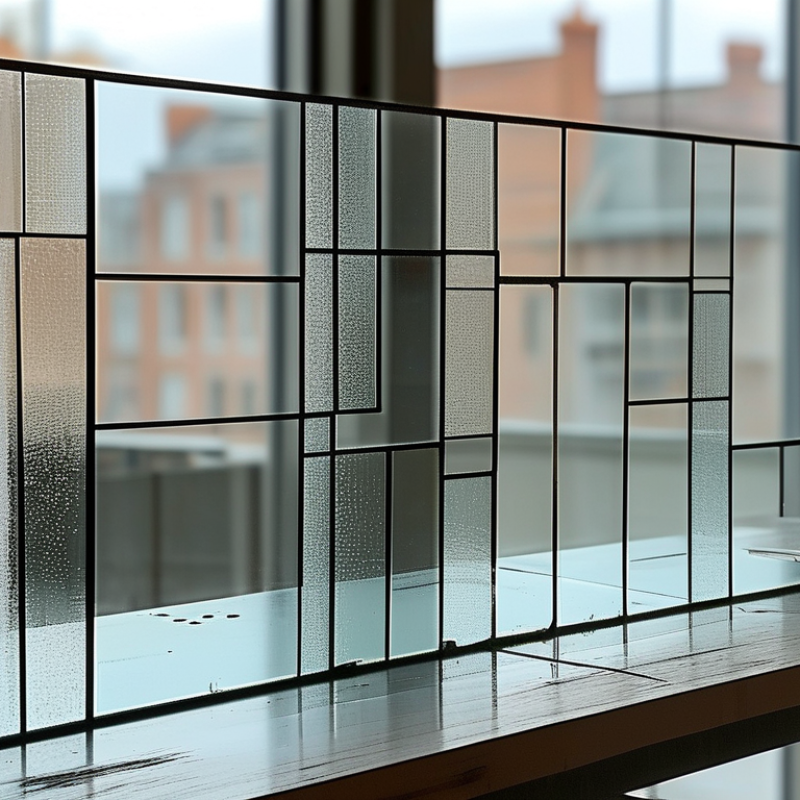
Choose the required level of privacy, light transmission, and surface texture. Pattern Glass | Custom Textured Glass Cut to Size may suit a partition where diffuse light and visual privacy are useful. However, textured surfaces can be harder to clean and may alter the appearance of seals. Ask the fabricator for thickness recommendations, heat-soak options when appropriate, tolerance limits, and test documentation. Confirm compliance with local building requirements and the installer’s fixing system. Do not select glass from a picture alone; request a physical sample under daylight and indoor lighting. I would also recheck dimensions before approval, because practical projects rarely stay perfectly predictable.

Measure the Required Glass Dimensions and Edge Details

Custom tempered glass starts with accurate site measurements. Measure the opening width and height at the top, middle, and bottom. Record the smallest usable dimension, not the largest. Walls, frames, and tiles rarely stay perfectly square. Leave suitable installation clearance for the hardware and glass movement. The required gap depends on the application and thickness. Confirm it with a qualified glass professional before ordering.

Write every measurement in one unit. Note the glass thickness and the finished edge requirements. Common options include polished, seamed, beveled, or exposed edges. Mark rounded corners, corner radii, holes, notches, and cutouts on a clear sketch. Sketch it clearly. Identify which sides face outward. This prevents confusion during fabrication and installation.

I have learned that a second measurement is rarely wasted. Check diagonals and compare the opening with your drawing. A small error can make a large panel unusable. My checking process is not perfect, especially around uneven tile or old frames. That is why photos, templates, and written notes matter. Do not estimate curved sections from memory. Use a flexible template when the shape is irregular. Before production, review every dimension and edge detail with the fabricator. Tempered glass cannot usually be altered after processing.

Choose the Appropriate Tempered Glass Type and Thickness

Choosing the correct tempered glass type and thickness is the key step in buying custom panels. Tempered glass is heat-treated for improved strength and safer breakage. National Glass Association technical guidance reports that tempered glass is roughly four to five times stronger than annealed glass of the same thickness. Still, stronger does not mean indestructible.

For a Custom size glass shelf - Shelves project, start with the span, supported weight, fixing method, and edge condition. A 6 mm panel may suit a short shelf with light objects. Longer spans often need 8, 10, or 12 mm glass, especially near brackets or drilled holes. ASTM C1048 specifies requirements for heat-treated flat glass, while EN 12150 covers thermally toughened soda-lime silicate safety glass. Ask the fabricator to confirm compliance with the standard used in your region.

Clear Tempered Glass offers maximum light transmission, while low-iron glass gives a cleaner edge appearance. Tinted or patterned glass can reduce glare, but it may change color perception. Polished edges matter near hands. Holes and notches must be planned before tempering because cutting afterward is not practical. I have seen buyers choose thickness by appearance alone. That is a costly mistake. Load calculations can also be imperfect when users add books, plants, or heavy appliances later. Slightly conservative sizing deserves consideration.

Compare Suppliers, Certifications, and Customization Options

How to Buy Custom Size Tempered Glass Panels?

Comparing suppliers requires more than checking the lowest quotation. Ask for production photos, sample edges, and a written dimensional tolerance. A reliable supplier should explain glass thickness, maximum panel size, corner radius, hole placement, and edge finishing. Request certification documents that match your market, such as heat-strengthening records, safety standards, and batch traceability. A certificate without a test report is not enough.

Customization details often decide whether installation goes smoothly. Provide a measured drawing with exact width, height, cut-outs, polishing requirements, and quantity. For projects using 2 Panel Tempered Glass - 3 Panel Tempered Glass, confirm whether each panel has identical tolerances. Small differences can affect joints, clamps, and door alignment.

Ask how the supplier protects corners during packing and transport. Inspect the crate upon delivery. Broken corners are expensive.

Do not compare suppliers by price alone. Compare response time, drawing review, inspection procedures, replacement terms, and packaging quality. An experienced technical contact should identify conflicts before production begins. That matters. I have seen buyers approve a drawing while overlooking handle-hole positions. The glass was strong, but unusable. Still, even careful buyers miss details. Recheck every measurement against the finished opening, not an old plan. Get all changes documented before payment.

Review the Quote, Lead Time, Packaging, and Delivery Terms

When buying custom-size Tempered Glass Panels, read the quotation like a production document, not a simple price tag. Confirm glass thickness, exact width and height, edgework, corner radius, holes, tolerances, and inspection standards. ASTM C1048 covers heat-treated flat glass, while ANSI Z97.1 addresses safety glazing performance. Ask whether the quoted price includes cutting, tempering, crating, insurance, and unloading. It may not.

Lead time should show each stage: drawing approval, material preparation, tempering, inspection, and dispatch. A short promise can hide a long approval queue. The U.S. Department of Energy reports that Windows can represent 25%–30% of residential heating and cooling energy use, so glass performance and correct fit deserve careful review. Packaging also matters. Request photos or a written packing specification. A strong crate should separate panels, protect corners, and prevent movement with soft, non-abrasive materials.

Delivery terms need precise language. Confirm the shipping address, delivery appointment, damage-reporting window, and responsibility for unloading. The World Bank’s 2023 Logistics Performance Index evaluates timeliness as a core supply-chain factor, alongside infrastructure and shipment quality. That supports checking delivery reliability, not only freight cost. I would also photograph the crate before opening it. Small scratches can become expensive disputes. I once underestimated handling space. That was avoidable. A liftgate, indoor access, and two-person handling may need separate pricing.

How to Buy Custom Size Tempered Glass Panels? - Review the Quote, Lead Time, Packaging, and Delivery Terms

Panel Reference Finished Size
(W × H)
Glass Specification Edge and Processing Typical Quantity Indicative Unit Price
(USD)
Typical Production Lead Time Packaging Requirements Suggested Delivery Terms Quote Review Points
A. Interior Partition Panel 900 × 2,100 mm 10 mm clear fully tempered glass
Safety glazing compliant with EN 12150 or ASTM C1048
Flat-polished edges
Two Ø16 mm holes
Hole centers supplied by drawing
20 panels $115–$165 12–18 working days after drawing approval Individual protective film, foam corner guards, vertical A-frame crate, moisture-resistant wrapping FCA or CPT Confirm hole diameter, edge tolerance, glass color, and whether hardware cut-outs are included.
B. Shower Enclosure Panel 800 × 2,000 mm 8 mm Clear Tempered Glass
Optional low-iron glass for improved clarity
Flat-polished edges
One corner notch and three hinge holes
10 panels $95–$150 15–22 working days after final CAD drawing approval Soft separators between panels, edge protectors, reinforced export crate, “glass” handling labels CPT or CIP Check notch dimensions, hole location, minimum edge distance, and responsibility for measurement errors.
C. Exterior Balustrade Panel 1,200 × 1,100 mm 12 mm clear fully tempered glass
Heat-soak testing available as an additional option
All edges flat-polished
Four Ø20 mm holes for point-fixed fittings
30 panels $185–$275 18–25 working days; add 3–5 days for heat-soak testing Heavy-duty A-frame, rubber separators, sealed plywood crate, loading diagram, shock and tilt indicators when required CIP or DAP Verify structural design, wind-load requirements, hole tolerances, test certificates, and site unloading access.
D. Frameless Door Panel 900 × 2,200 mm 10 mm Clear Tempered Glass
Optional acid-etched privacy finish
Polished perimeter edges
Door handle holes and floor closer cut-out
5 panels $220–$340 18–25 working days after hardware template approval Separate vertical compartments, non-abrasive interlayers, reinforced crate, hardware packed separately CPT or DAP Confirm door handing, hardware templates, cut-out clearances, finish consistency, and installation tolerances.
E. Large Feature Wall Panel 1,800 × 2,400 mm 12 mm Low-Iron Tempered Glass
Optional ceramic frit or digital print
Polished edges
Maximum cut-out and lifting requirements to be reviewed before production
8 panels $420–$680 22–30 working days; printed finishes may require additional time Custom steel-reinforced wooden crate, vertical transport only, anti-scratch separators, center-of-gravity markings CIP or DAP Review maximum transport size, lifting equipment, crate dimensions, color approval, and replacement policy for transit damage.
F. Laminated Safety Panel 1,000 × 2,000 mm 6 mm tempered glass + 1.52 mm ionoplast interlayer + 6 mm tempered glass
Safety glazing tested to the applicable project standard
Polished edges
Four drilled holes or edge notches subject to engineering review
15 panels $310–$480 25–35 working days after interlayer and fabrication approval Dry separators, sealed moisture-resistant crate, vertical storage instructions, batch identification labels CIP, DAP, or DDP Confirm interlayer type, exposed-edge protection, local safety code, certificate requirements, and allowable storage period.
G. Frosted Privacy Panel 1,000 × 2,000 mm 10 mm acid-etched tempered glass
Uniform satin finish on one side
Flat-polished edges
Two Ø16 mm holes and one rectangular cut-out
25 panels $175–$260 15–23 working days after finish sample approval Clean protective interleaving, sealed crate, finish-direction labels, impact protection at all corners FCA or CPT Check surface uniformity, viewing direction, fingerprint sensitivity, hole layout, and cleaning instructions.
H. Replacement or Small-Batch Panel 600 × 1,200 mm 8 mm Clear Tempered Glass
Single custom panel with standard edge finishing
Flat-polished edges
Cut-outs priced separately
1–3 panels $145–$230 10–16 working days after payment and drawing approval Individual carton protection inside a small wooden case; no mixed loose loading CPT or DAP Confirm exact measurements, replacement liability, freight minimums, insurance coverage, and delivery appointment.
Planning note: The prices and lead times above are typical non-branded planning ranges for custom fabricated panels and are not firm quotations. Final pricing depends on glass thickness, size, quantity, processing, finish, testing, packaging, destination, taxes, and shipping method. Before placing an order, request an approved dimension drawing, product specification, packing list, inspection documents, delivery schedule, and clearly defined damage-claim procedure.

Confirm the Order and Plan Safe Installation

Before ordering custom size Tempered Glass Panels, confirm every detail in writing. Check the width, height, thickness, edge treatment, corner shape, and required holes. A tiny measurement error can delay installation or leave an unsafe gap. For greenhouse projects, confirm whetherCut To Size Greenhouse Glass matches the frame, glazing system, and local weather conditions. Ask for a drawing showing measurements and hole positions. Do not rely only on a phone conversation.

Tips: Measure the opening in several places. Record the smallest dimension. Leave the manufacturer’s recommended clearance for expansion and fitting. Confirm the glass quantity, delivery date, packaging, and inspection process. When the panels arrive, examine the edges, corners, and surface before signing for delivery. Minor damage can become a serious crack later.

Plan safe installation with trained help. Tempered glass is stronger than ordinary glass, but its edges remain vulnerable. Use clean suction cups, cut-resistant gloves, eye protection, and stable supports. Keep the panel upright and never place its edge directly on concrete. Install setting blocks before lifting the glass into the frame. Avoid forcing a panel into a tight opening. I have seen careful teams miss this step, then discover stress after installation. The frame should be clean, level, and free from sharp metal points. Use compatible seals and follow the panel supplier’s fitting instructions. A second person makes handling safer.

High-Impact Laminated Glass: Custom Safety Solutions from Trusted China Manufacturers

Laminated Glass provides a high-impact safety solution for architectural, commercial, and transportation applications. Manufactured in China through a controlled heating and high-pressure process, it combines two or more glass layers with a durable interlayer. If the glass is damaged, the fragments remain attached to the interlayer instead of scattering widely, helping reduce injury risks and maintain a protective barrier. Different glass combinations and interlayer structures can be selected to meet varying requirements for strength, sound control, security, and visual performance.

Our factory supplies customized laminated glass in a wide range of sizes, shapes, colors, and thicknesses. Customers can choose the appropriate glass type and adjust the PVB interlayer color and thickness according to project specifications. From standard panels to specially shaped components, our production team supports precise customization and consistent quality control for diverse applications.

As an experienced China-based supplier, we provide flexible sea or rail transportation options based on delivery needs. Cargo insurance is included, with the customer’s company listed as the beneficiary. Full-container-load shipments are professionally loaded by our team, while less-than-container-load cargo is handled through a port warehouse, supporting secure packing, organized dispatch, and smooth international delivery.

FAQS

: What should I confirm before ordering custom-size tempered glass panels?

: Confirm the panel’s location, finished opening, dimensions, orientation, and nearby hardware. Note holes, notches, polished edges, and rounded corners. Tempered glass cannot be cut after heat treatment.

How do I choose the correct glass thickness?

Consider water, cleaning chemicals, wind, temperature changes, impact, and exposed edges. A bathroom screen may need different specifications from a balcony panel. Ask the fabricator for a thickness recommendation.

Should I choose clear or textured glass?

Choose based on privacy, light transmission, and cleaning needs. Textured glass can soften daylight and reduce visibility. However, textured surfaces may collect dirt around seals. Samples help.

What measurements are most important?

Measure the finished opening, not an old glass panel or outdated drawing. Record width, height, corner details, holes, and nearby fixing points. Small errors can delay production. They happen.

How can I compare suppliers fairly?

Compare dimensional tolerances, drawing reviews, inspection procedures, packaging, and replacement terms. Ask for sample edges and written production details. Do not judge by price alone. Cheap can become expensive.

What documents should I request?

Request safety documentation, heat-treatment records, test reports, and batch traceability. Confirm the documents match your local requirements. A certificate without supporting test information may be insufficient.

What should the quotation include?

Check thickness, exact dimensions, edgework, holes, corner radius, tolerances, crating, insurance, and unloading. The quoted price may exclude some services. Ask for every cost in writing.

How should custom glass be packed and delivered?

Panels should stand separately inside a strong crate with protected corners. Soft, non-abrasive materials should prevent movement and surface damage. Photograph the crate before opening it. I once underestimated handling space. That was avoidable.

Conclusion

Buying a custom size tempered glass panel begins with clearly defining its intended use and performance requirements. Consider whether it will be used for a shower enclosure, partition, door, tabletop, railing, or another application, then determine the required strength, safety features, transparency, surface finish, and resistance to heat or impact. Measure the width, height, thickness, number of panels, cutouts, holes, corner shapes, and edge treatments carefully. Accurate measurements are essential because tempered glass usually cannot be modified after processing.

Next, select the appropriate glass type and thickness for the installation environment. Compare suppliers by reviewing their quality certifications, production capabilities, customization options, communication, and previous project experience. Before placing an order, examine the quotation, minimum order requirements, production lead time, packaging method, shipping arrangements, and delivery responsibilities. Confirm every specification in writing, including dimensions, tolerances, edge details, and hardware compatibility. Finally, plan a safe installation with suitable tools, protective equipment, stable support, and qualified assistance when needed. Careful preparation helps ensure the panel arrives in good condition and performs reliably over time.

Lily

Lily

Lily is a dedicated marketing professional at LYD GLASS, situated in the vibrant city of Qinhuangdao. With a keen understanding of the glass manufacturing industry, she specializes in promoting the company’s core products, including Tempered glass, Laminated glass, and Insulated glass. Lily’s......
Previous Why Choose a Mirror Glass Manufacturer for Your Project?